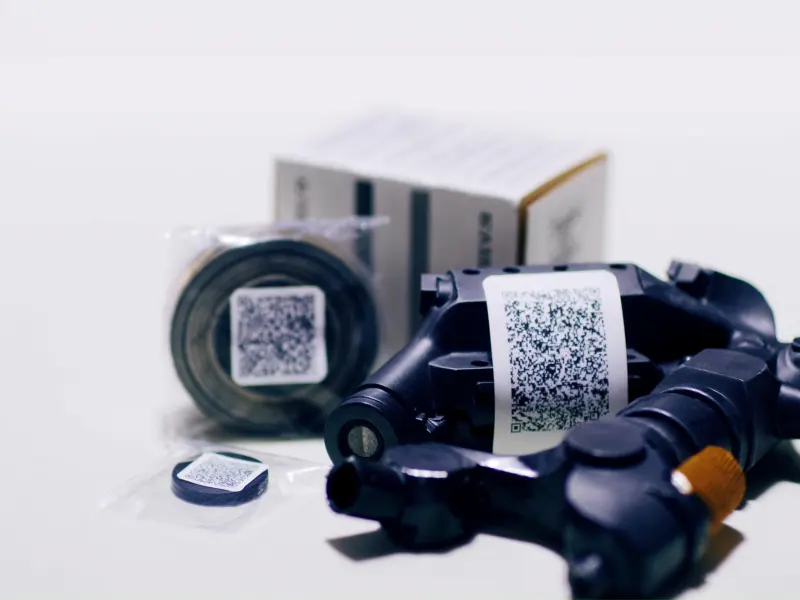
A safe choice in automotive spare parts.

Counterfeit spare parts create a serious safety risk in service and warranty processes.

Implementation

Tagvex in automotive spare parts.

Tagvex assigns parts a unique number at unit or batch level and records every change of hands from the end of the line to the warehouse, the distributor, the dealer and the workshop. Before fitting a part, the workshop scans it and checks its record. A copied code shows up through reads in an unexpected region or through repeated reads.

Counterfeit automotive spare parts are a direct road-safety matter. Brake pads, filters, bearings, tyres and batteries may look like the original from the outside, yet differences in material and manufacturing quality can lead to failure — even an accident — within a short time. The mechanic fitting the part, or the vehicle owner, usually has to rely on how the box and the label look; this makes packaging imitation attractive to counterfeiters and clears the way for a fake part to be fitted to a vehicle unnoticed.

Request a meeting


Data

The scale of counterfeit risk.

€2.2 billion

Annual sales lost by the legitimate tyre sector in the EU to counterfeits (7.5% of sales)

Source: EUIPO, The Economic Cost of IPR Infringement in the Tyres and Batteries Sectors, 2018
€180 million

Annual sales lost by the legitimate battery sector in the EU to counterfeits (1.8% of sales)

Source: EUIPO, The Economic Cost of IPR Infringement in the Tyres and Batteries Sectors, 2018

Risks

Risks in automotive spare parts.

Safety-critical parts

In braking, steering and suspension parts, a counterfeit directly affects whether the vehicle can be used safely. When a failure occurs and the part's origin cannot be established, determining liability and collecting other parts from the same batch becomes difficult.

Box and label imitation

Counterfeiters can copy the boxes and labels of known brands one to one, or collect original packaging and reuse it. When a mechanic cannot verify a part from its box, a counterfeit can be fitted to a vehicle unnoticed.

Multi-layered distribution chain

Parts change hands many times between distributors, sub-dealers and workshops. A counterfeit can enter the chain at a link where no records are kept, and finding out later where it entered becomes difficult.

Low-priced online listings

On marketplaces and social media, branded parts can be offered noticeably below market price. Because these listings use the brand's catalogue images and part numbers, they can mislead buyers.

Regulation

Regulations relevant to traceability.

EU

Motor Vehicle Block Exemption Regulation (EU) 461/2010

The European Commission has extended the block exemption applying to vertical agreements in the automotive sector until 31 May 2028; the updated guidelines stress that authorised and independent repairers must be able to access vehicle data on equal terms. The presence of so many actors in the repair market makes being able to verify a part's origin even more important.

Official source
TR

Block Exemption Communiqué on Vertical Agreements in the Motor Vehicle Sector (2017/3)

The communiqué defines an original spare part as one of the same quality as those used in vehicle assembly and manufactured to the vehicle manufacturer's technical specifications and production standards. Where the parts manufacturer certifies this quality, the part is presumed to be an original spare part until the contrary is proven; this makes a verifiable link between the part and its certification important.

Official source
EU

Battery Regulation (EU) 2023/1542, electric vehicle batteries

From 18 February 2027, every electric vehicle battery placed on the market will have an electronic record — a battery passport — holding information specific to the battery model and to the individual battery, accessible via a QR code. Unique product identity and chain-of-custody records can support this preparation.

Official source
TR

Law No. 7223 on Product Safety and Technical Regulations

The law, in force since 12 March 2021, requires actors in the supply chain to keep records of whom they bought a product from and whom they sold it to, and makes the recall of unsafe products mandatory. Batch-level distribution records make it easier to find where affected parts are when a recall is needed.

Official source

This section is for information only; official sources prevail for current obligations.

FAQ

Questions about automotive spare parts

Can independent workshops also verify?

Yes. Verification is done with the mobile app on a smartphone; authorised and independent workshops, dealers and vehicle owners can all use the same method. No separate reader device or special authorisation is needed.

Should numbering be at unit level or batch level?

Batch-level numbering may be preferred for high-volume consumable parts, and unit-level numbering for safety-critical or high-value parts. A batch number makes it easier to see which dealers and workshops parts from the same batch reached if a problem arises.

How does it help in a recall process?

Tagvex records show which batch was delivered to which distributor, dealer and workshop. This information helps quickly determine where the affected parts are; the recall process itself is run according to the company's own procedures.

Meeting request

The right numbering level for your product is set through a needs analysis.

The first meeting reviews your product, sales channels and the risks you face, and recommends a suitable method.

Request a meeting